
Christmas Dress Silhouettes for Girls: A-Line, Twirl and Ball Gown Compared
Two Christmas dresses can share a colour and still feel completely different to wear, because the silhouette, meaning the overall outline of the dress, decides how it moves, sits and photographs. This guide explains the three shapes most often seen in a christmas party dress for kids (the A-line, the twirl skirt and the ball gown) and how length changes each of them. Use it to match a shape to your daughter’s age and the plans for the day, then browse the Li & Li Christmas collection for kids with a clearer idea of what to look for.
Why Silhouette Matters Before Colour
Colour and embellishment draw the eye first, but the outline determines what happens afterwards. It affects whether a child can climb into a car, sit at a table, dance or be lifted for a photograph. Two dresses in the same shade of red can ask very different things of the girl wearing them.
Thinking about shape first turns a wide collection into a handful of realistic candidates. After that, colour, fabric and detailing become the tie-breakers instead of the starting point.
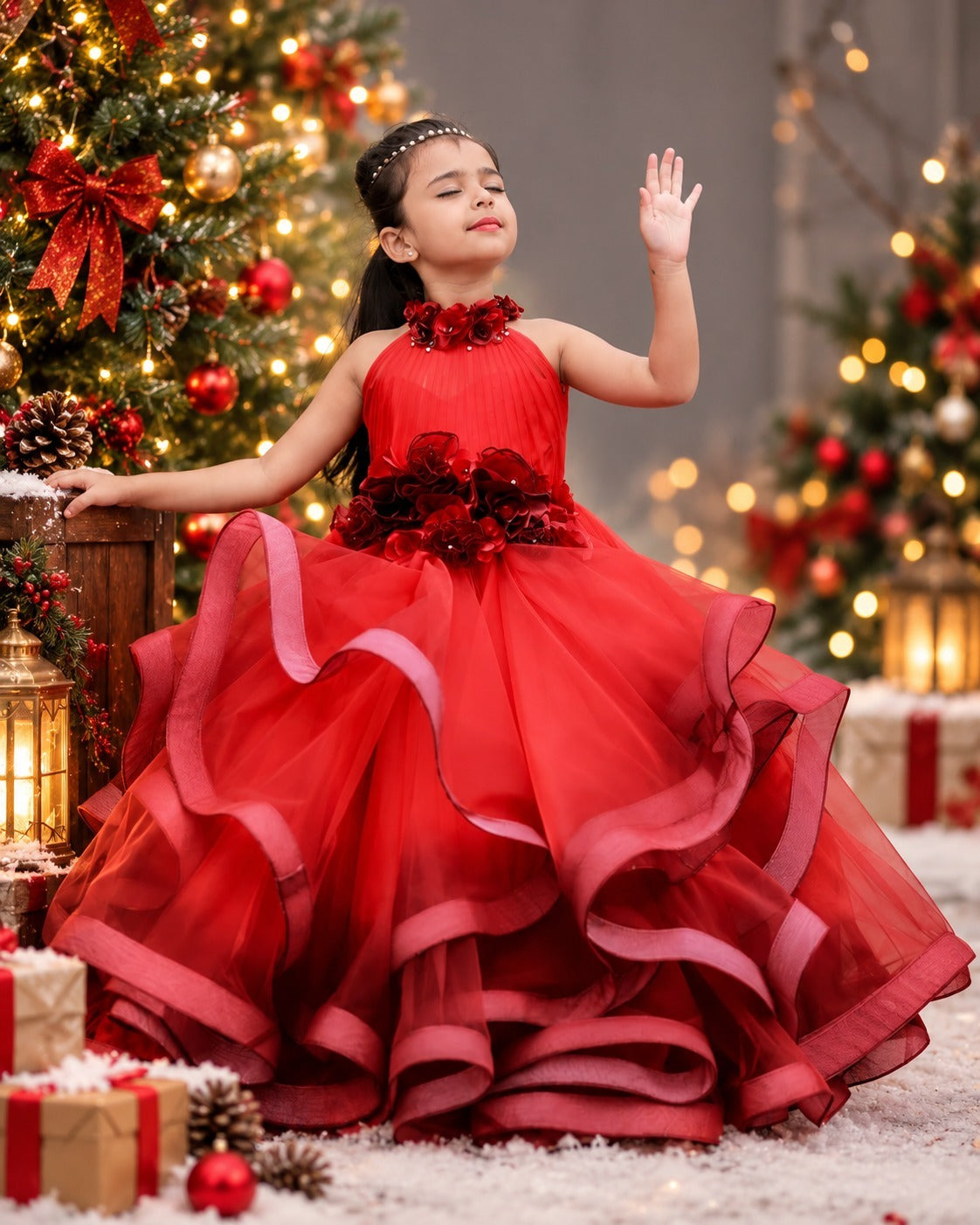
Christmas Collection for Kids
Starting from ₹2,150
- Festive red, wine and forest green frocks and gowns
- Soft satin, organza and net with easy back-zip closure
- Knee-length frocks to full-length party gowns
Best forChristmas programmesMidnight MassFamily dinners
The A-Line Dress
An A-line dress fits close at the shoulders or bodice and widens gradually towards the hem, forming a shape like a capital A. The skirt flares without needing layers of volume, so the overall outline stays simple. That makes it a common choice across many ages, because the skirt has room to move without becoming bulky.
A frill, sequins or a bow at the waist or hem add festivity without changing the outline. When comparing A-line styles, check where the flare begins and how much fabric the skirt holds, since both change how structured the dress looks.
The Twirl Skirt
A twirl skirt is built for movement. Layers of net, tulle or similar fabric create volume that lifts and spins when a child turns, which suits parties and dancing. Some designs combine a satin layer with net for added body.
More volume also means more fabric to manage. Check how many layers the skirt has, whether there is a lining underneath, and how the waist is finished, since a fitted waist keeps the volume where you expect it. A twirl skirt rewards a child who likes to move, but it asks for a little awareness of doorways and chairs.
The Ball Gown
The ball gown is the most formal of the three. A fitted bodice leads into a full skirt, and some designs add a trail or a large bow at the back. The outline is dramatic and suits portraits, because it reads clearly from the front, side and back.
It also asks the most of the wearer. A long, full skirt needs planning for stairs, car journeys and crowded rooms. Consider how many hours she will wear it, and whether a simpler spare outfit would help later in the day.
Knee Length or Full Length?
Length changes how any silhouette behaves. A knee-length hem leaves the legs free and suits an active child. A full-length hem looks more formal but needs care when walking, climbing steps or running.
For babies who are not yet walking, length matters less for movement and more for how the dress sits when she is held or seated. For toddlers who are crawling or taking first steps, a shorter hem is usually easier to manage. Older girls can often handle a longer skirt, particularly if they have had time to walk in it beforehand.
Matching Silhouette to Age
Babies are best served by ease of dressing and a shape that does not bunch when she is carried. Front-opening styles are simpler to put on, so a back-zip dress calls for patience and a settled baby.
Toddlers need freedom to move, which usually points to an A-line or a knee-length hem. Girls aged 4 to 10 can take on more volume, and their own preferences deserve a say. Let her choose between two or three options and try the dress on early, sitting and bending to see how it behaves.
Fit, Fabric and Care Checks
Whichever shape you choose, measure your child instead of relying on age labels. Chest, waist and length are the usual starting points, and children of the same age can differ in size. Where a size chart gives a range, think about growth room and how soon the dress will be worn again.
Read the product description for the fabric, the lining, the closure and the care instruction. Occasionwear with frills, sequins or satin may need dry cleaning, and that changes how much effort the dress asks of you after the celebration.
Pairing Shape With the Plans for the Day
For a long service or a family lunch, an A-line or knee-length dress tends to cope well with sitting and standing. A party with dancing suits a twirl skirt. Portraits and formal occasions suit a ball gown, particularly where you can plan the walking in advance. If the day includes all three, consider two outfits instead of forcing one dress to do everything.
Frequently Asked Questions
What is the difference between an A-line dress and a ball gown?
An A-line dress widens gradually from the bodice to the hem, giving a simple outline. A ball gown has a fitted bodice and a full skirt, often with extra detail such as a trail or large bow, which makes it more formal and voluminous.
Is a twirl dress practical for a toddler?
It depends on the skirt and the child. A layered skirt adds volume and fabric, so check its weight, lining and length. A shorter hem is usually easier for a toddler who is crawling or taking first steps than a full-length twirl skirt.
Should a Christmas dress be knee length or full length?
Choose knee length for an active child or a day full of movement, and full length for formal occasions and portraits. Consider stairs, car journeys and how long she will wear the dress, since a longer hem needs more care when walking.
How do I choose a size for a Christmas party dress?
Measure chest, waist and length, then compare them with the size chart rather than relying on age labels. Children of the same age can vary in size, so consider how much growth room you want and how soon the dress will be worn again.
How should I care for an embellished Christmas dress?
Follow the care instruction on the product page or label. Frills, sequins and satin may call for dry cleaning, so check this before buying. Store the dress away from heat and avoid pressing embellished areas unless the care label says it is safe.
Find a Christmas Dress Shape You Like at Li & Li
Choosing becomes easier once you know the shape, the length and the plans for the day. Decide whether the outline should be simple, lively or formal, check the size chart, and read the care instruction before ordering. When you are ready, browse the Christmas collection and compare styles against your shortlist at your own pace.